Provide sustainability data
Textile DPPs consolidate data on materials, origin and manufacturing centrally in a consistent structure.
Implement the DPP for textile companies efficiently in line with the ESPR and EU requirements. Capture, validate and publish product passport data centrally - from material shares to supply-chain evidence.
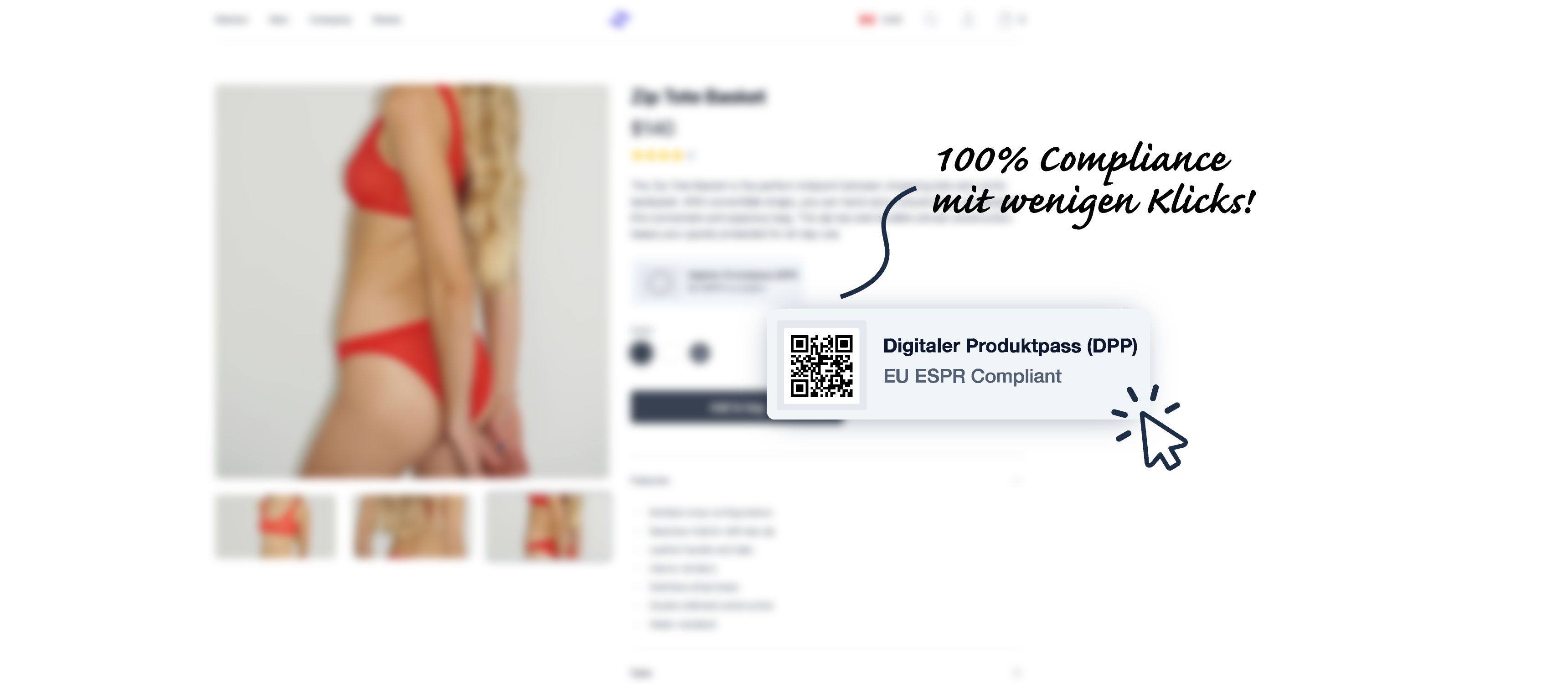





The Digital Product Passport for textiles is introduced through the Ecodesign for Sustainable Products Regulation (ESPR). Based on current EU planning, the delegated act for textiles is expected to take effect around 2027 – textiles are among the first ESPR product groups. Those who build their data foundation now will meet the requirement without time pressure.
The DPP makes product-related information transparently available to customers and authorities - from materials and origin to sustainability and compliance evidence.
Textile DPPs consolidate data on materials, origin and manufacturing centrally in a consistent structure.
Transparent product information builds trust and helps brands back up sustainability claims with solid evidence.
The Digital Product Passport supports circular processes because key product data is available for recycling.
Via QR code, end customers can view relevant information on fibres, yarns and textiles directly.
DPP data is documented and versioned in a structured way, so ESPR requirements and market demands are met.
This example shows the public DPP page of a textile item, as end customers and authorities see it via QR code – every element meets a specific ESPR requirement.
Every item gets its own DPP URL – reachable without an app and without a login.
Fibers and shares broken down ESPR-compliantly – including recycled content.
OEKO-TEX®, GOTS & co. are stored as verifiable proof directly on the product.
Name, brand and article number clearly assigned – with a QR code for the label.
Production steps from yarn to assembly – transparent at every stage.
Care instructions and recycling information extend the useful life.
From data capture to the QR code on the product: SolveDPP guides your team through the DPP process in a structured way – without spreadsheet chaos and without an in-house IT project.
Capture fibres, material shares, origin and care instructions per item – manually, via CSV or Shopify import. AI auto-complete pre-fills recurring fields.
Field validation checks ESPR mandatory data and flags gaps – before the product passport is published. All changes remain versioned.
Each item gets a public DPP page with a QR code. End customers and authorities see material, origin and evidence directly on the product.
Since we started using SolveDPP, we create the Digital Product Passport for our textile products much faster. That improves our data quality and reduces follow-up questions from purchasing and compliance.
Clara Neumann
Head of Sustainability at Nordwelle Textil GmbH

The Viennese brand Soda Lingerie makes lingerie and swimwear from TENCEL™ Modal in its own workshop. With SolveDPP, the team consolidates material, origin and care data in ESPR-compliant product passports – and makes them transparent via QR code directly on the product.
Example “Modal Soft Bra”
SolveDPP is suitable for textile companies of any size, from brands and manufacturers to retail and private-label organizations.
Yes. Our data models and workflows are geared toward the requirements around the Digital Product Passport and ESPR and can be adapted to your product categories.
Usually within a few days, with a pilot for selected textile products and subsequent scaling to further collections.
Book a demo and see how SolveDPP measurably accelerates your Digital Product Passport for textiles.